Beauty is our expertise. Clients come to us for beautiful designs. Our websites win the most prestigious international design awards. Meanwhile, aesthetics seems to be ephemeral. It cannot be quantified and objectively evaluated. Why are savvy clients willing to pay so much for something intangible? If asked, they may struggle to articulate their answer, but they intuitively know that a well-presented product inspires credibility in their customers. What drives this intuition?

The answer is that beauty conveys value and evokes trust. We tend to idealise beautiful people and ascribe them a dignity they may not have. Product design affects customers similarly. Beautiful features—like the perfectly rounded corners of a smartphone, the sleek body of an expensive car, or the gleaming symmetry of a glass building—push them towards the purchase. They signal reliability and high quality, fostering a sense of trust. This trust is not just a feeling but a reassurance that the product is of high quality and reliable. But why is that?
When we encounter a visually pleasing object, our brain's neurons spring into action, releasing endorphins that trigger a sense of pleasure. This is akin to the reaction we experience when we perceive something as valuable, right, or ethical. This neurological response to beauty provides a scientific basis for the connection between aesthetics and trust.
In marketing, beauty bestows a creation with value and evokes a spectrum of emotional and sensual associations. A beautiful product appears flawless in many aspects. Furthermore, those who possess it elevate their symbolic status and lifestyle, creating a deep and personal connection with the acquisition. This emotional impact of beauty can make consumers feel more connected to the product, enhancing their confidence in their purchasing decisions.
The concept that beauty is intricately linked to truth is not novel. The ancient philosopher Plato posited that all earthly things are mere shadows of divine ideas, lacking true reality. He argued that beauty is the only perfect fusion of concepts and matter humans can perceive. It represents the ideal harmony of body, mind, and soul, combining reason and pleasure with an undeniable authenticity. Plato believed everything beautiful is imbued with a spiritual essence and carries profound meaning. Such beauty, he contended, is nothing less than the source of life, inspiring us and connecting us to a higher purpose.
Even science closely links the concept of beauty with truth and perfection. For example, Paul Dirac, one of the founders of quantum mechanics and a Nobel laureate in physics, formulated his famous equation in 1928, demonstrating that every particle has an antiparticle. He made this discovery through purely mathematical calculations without relying on experimental data, which was considered a revolutionary approach in the scientific community at the time.
Dirac was not afraid to swim against the tide. He believed that the beauty of a mathematical expression was evidence that the conclusions were correct. This truly open-minded scientist claimed, "It is more important to have beauty in the equations of physics than to have them agree with experiments." He was confident that his fellow theorists would be on the right track if they pursued beauty in their equations while trusting their intuition.
Today, mathematicians consider a proof to be elegant if it meets the following criteria:
-
Uses minimal data
-
Is brief
-
Contains an element of surprise
-
Incorporates original insights
-
Is general (applicable broadly and deeply)
We can extrapolate these aesthetic principles to any practices that require analysis and synthesis of new knowledge. For example, here are five criteria for creating a beautiful design:
-
Fulfilment of key project requirements
-
Minimal use of design devices
-
Capturing the user’s attention
-
Incorporation of original ideas.
-
Versatility (accessibility to most users)
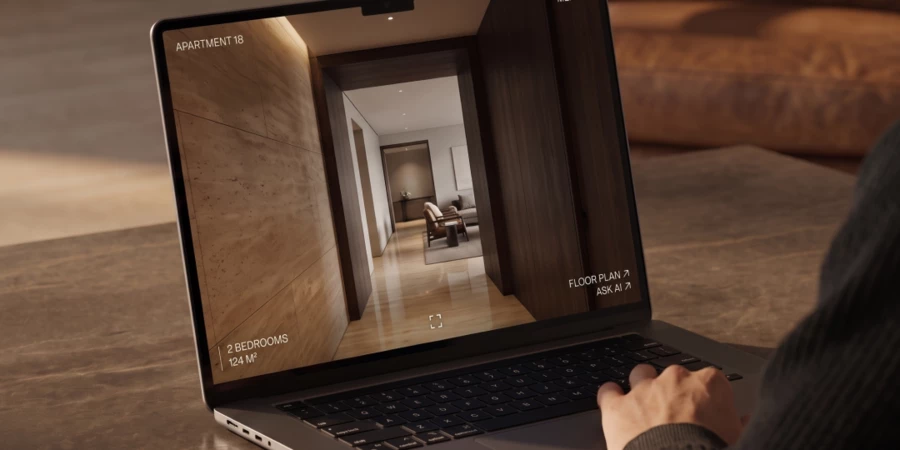
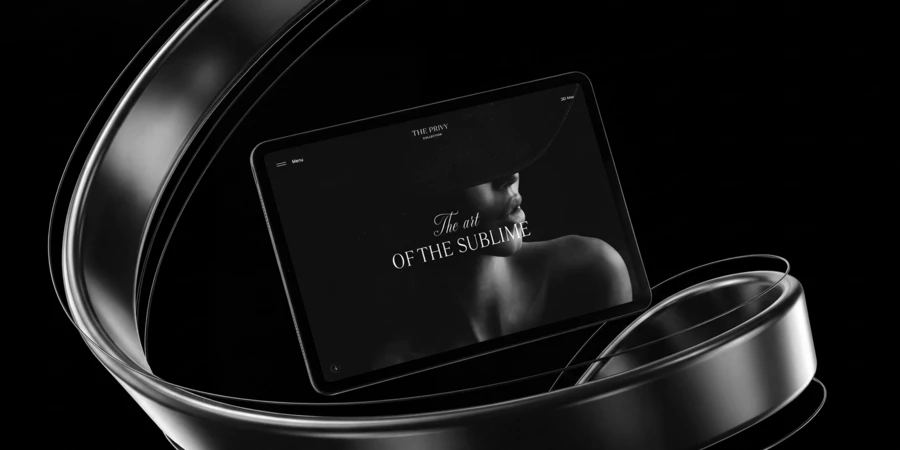
Vide Infra takes a holistic approach to aesthetics, following a mathematically calibrated elegance. The beauty of our sites lies in their effective design, elegant storytelling, expressive animation, and precise structure. This synergy translates to the products we advertise. In the customers' minds, the aesthetic image merges with the actual product, making them want to buy and enjoy it. This is how beautiful design works and the reason behind its cost.